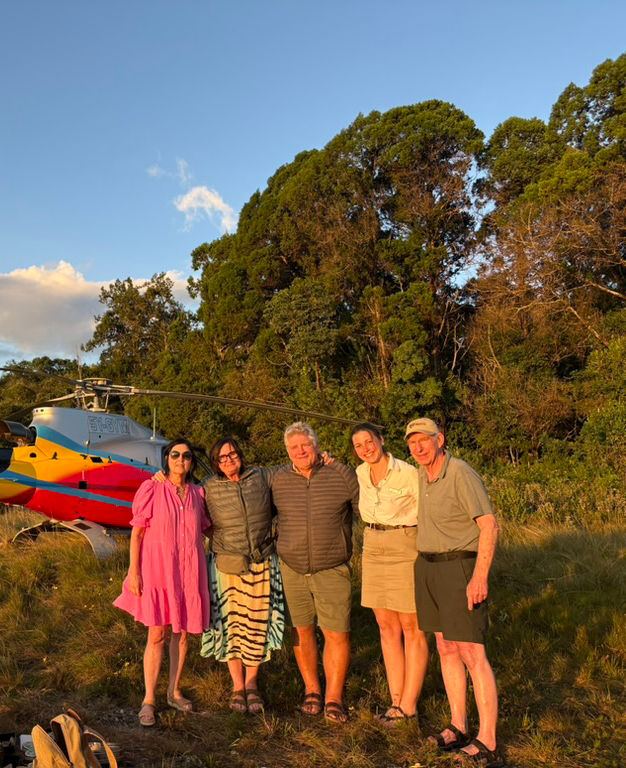

Last month we were on an inspection trip in East Africa and experienced an excursion that took us far from the normal safari environs. We were staying at Suyian, a wonderful new lodge in the Laikipia region of norther Kenya. One afternoon we (Sussi, Steve, Pixie, Leon and I) boarded a helicopter for what I thought would be a simple sight seeing flight. Boy, was I surprised!
Elevation 5800. Take off from Suyian. The helicopter doors are off, and we are each wearing headphones. The pilot, Josh, pipes in a great selection of oldies to accompany us on our journey. We are only a few feet above the treetops, flying over the African plains. Below are elephant herds that take fright and encircle their young, giraffe that bound away on their long legs, groups of impala that seem not to notice and numerous other animals. We begin following a river as it meanders towards the north.
Elevation 4840. Suddenly, the earth falls away, and we are on the edge of a cliff (actually the Great African Rift Valley). The river has become a waterfall and is cascading into a gorge far below. The helicopter turns its nose down and we are soon traversing the river gorge. I feel like Tom Cruise in Top Gun with a fighter jet on our tail as we negotiate the steep canyon of the river. Below we see the occasional local bathing or doing laundry in the river.
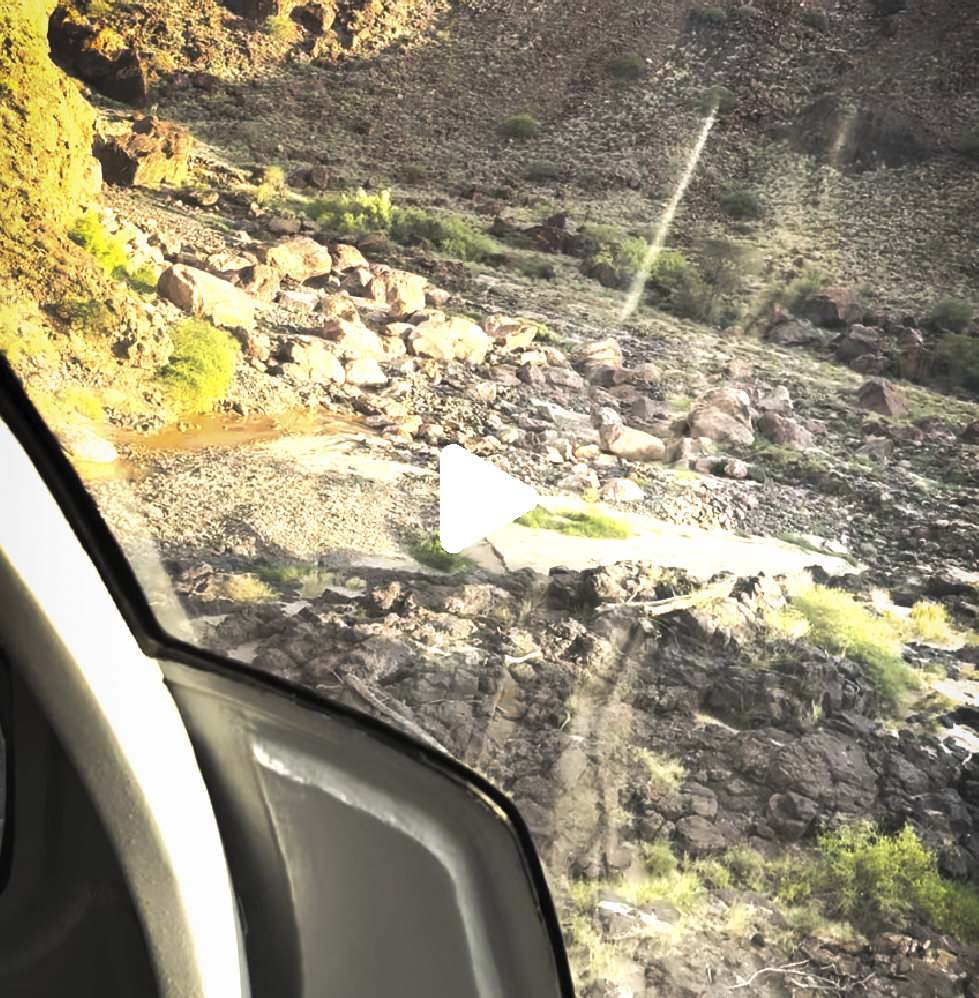
Elevation 3500. We finally level out. I am in the middle seat next to the pilot and my husband, Leon, is next to me hanging out the door taking photos. I finally open my eyes, my stomach is in knots, but Leon could not be more exhilarated. Below us now are small subsistence farms. This is the home of the Turkana people, a group of pastoral nomads who inhabit this arid land. There are no roads and no permanent structures, just mud and thatch huts. We see herds of goats and sheep and a few camels. Josh tells us that these people are so isolated that they do not even speak Swahili (the main language of East Africa), their kids do not attend schools, there are no stores or clinics. Even the ubiquitous motorcycles are non-existent. This is a completely new level of inaccessibility from the civilized world.
Elevation 3200. The topography has changed once again. There are few signs of life. Suddenly the helicopter begins to rise, and we are soon on the lip of an extinct volcano (Silate). Josh tells us he is going to land, and we all gasp as there does not seem to be a square inch of level ground.
Elevation 4100. To our amazement he puts the chopper down and we all clamber out to stretch our legs and take in the awesome view of the caldera. Far below we see native herders with flocks of sheep and goats.
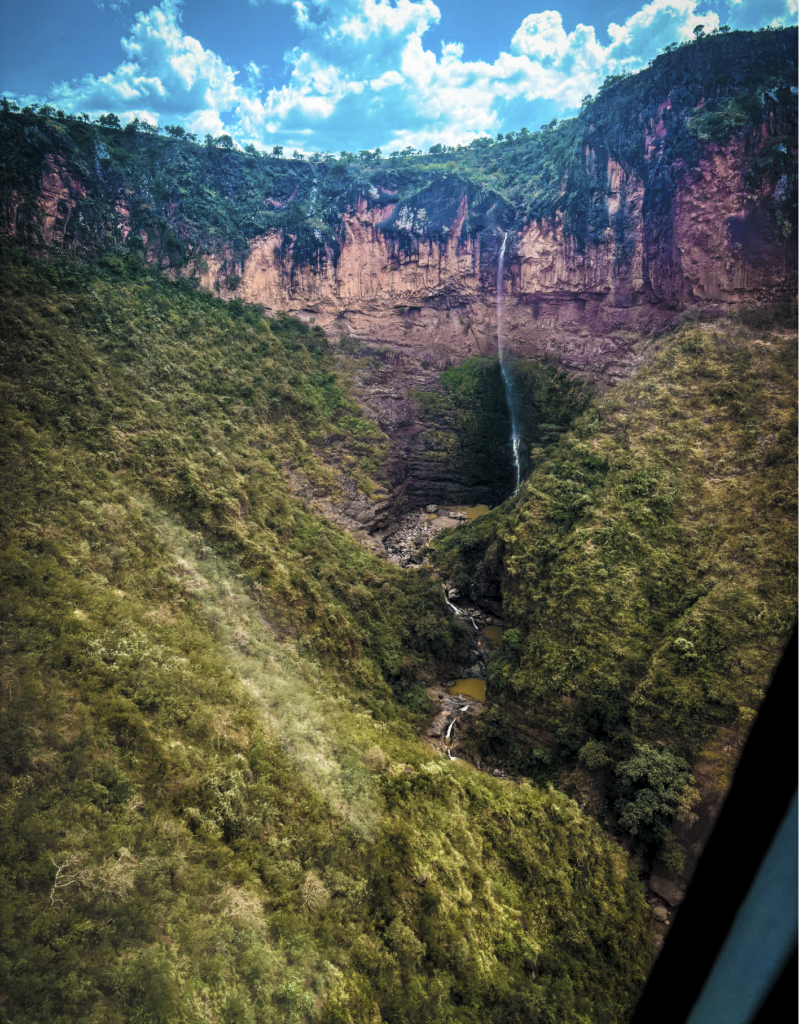

We are soon airborne again and now flying over what appears to be black scorched earth. As we get closer, we realize that these are ancient lava flows from the volcanic activities in the rift valley. Despite the millions of years since these were formed, the rock is so hard and inhospitable that it still does not support any vegetation.
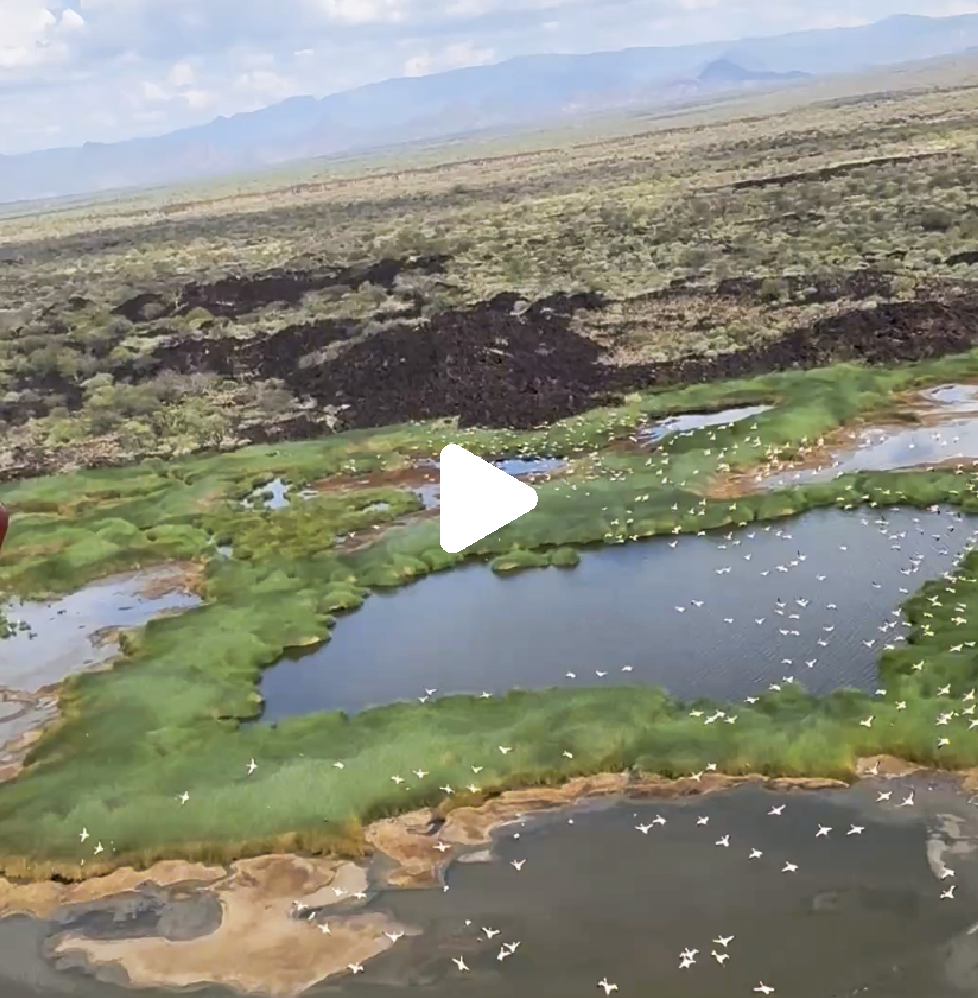
Elevation 2100. In the midst of this barren desert environment, we see in front a series of dark green pools. As the helicopter approaches a cloud of pink and white alights from the water’s surface. These are thousands of flamingos that circle below us in a great flock. The ponds are fed by occasional rainfall that collects in springs that seep through the rock. Not far from here we traverse another pond. This one has hundreds of crocodiles that flee the sound of the helicopter. I doubt there is a greater density of these reptiles anywhere in Africa. These prehistoric beasts have been isolated in this corner of the world forever.
Elevation 1200. As we descended the air became considerably warmer and by now it is extremely hot. We are once again traversing a riverbed. Josh lands, this time in the dry bed of an ancient river. The surrounding hills feel like we are on the set of Raiders of the Lost Ark. I expect Harrison Ford to appear in his weathered hat. We take off again and see below us tall narrow chimneys of mud reaching 30 ft into the air. Josh explains that these are termite mounds and, due to the extreme heat the ants construct these chimneys to regulate the temperature in their underground chambers.

Elevation 1135. We are all feeling the heat and thank goodness Josh has planned a refresher stop. He lands on the lava rock alongside one of the freshwater springs. We have been advised to bring our bathing suits, and we are soon cooling our bodies in the waters of this desert oasis as we sip glasses of wine and the minnows tickle our feet. It is absolutely surreal to be bathing in this harsh environment. We could just as well be on the face of the moon.
After a welcome break we embark on the next leg of our journey. This takes us through some of the most beautiful canyons. Sculpted by time into fantastic formations. Slowly our elevation is climbing and the topography is changing. There is now more vegetation and even some signs of life. We see an occasional hut and herders in forest clearings. It is hard to believe how remote and inaccessible these slopes are nor to comprehend how these people subsist.
Elevation 7800. The vegetation has become almost tropical and the now almost vertical mountain slopes are covered with dense forests. The temperature has steadily dropped, and we are pulling on jackets to keep warm. Josh lands once again on the cliff edge and we pull out the picnic basket for a well needed sundowner and snacks. Overlooking the breathtaking mountains below it is hard to believe that is Africa and that in one afternoon we have traversed so many varied and sometimes harsh environments.
Elevation 5800 ft. As the sun sets, we land back at Suyian. We are all absolutely speechless. This has been an experience that none of us will ever forget. It has been the most exhilarating flight. One that can only be experienced in a helicopter with a highly skilled pilot. We have seen lands that only exist in the movies, and we have a greater appreciation for the extremely challenging environments where others eke out an existence. Would I do it again– probably, but not tomorrow. Would Leon do it again – absolutely and tomorrow. Would I recommend this for my clients – unconditionally! This one afternoon gave me a completely new perspective for what is off the beaten track in Africa.
DID YOU KNOW?
Bulky baobabs
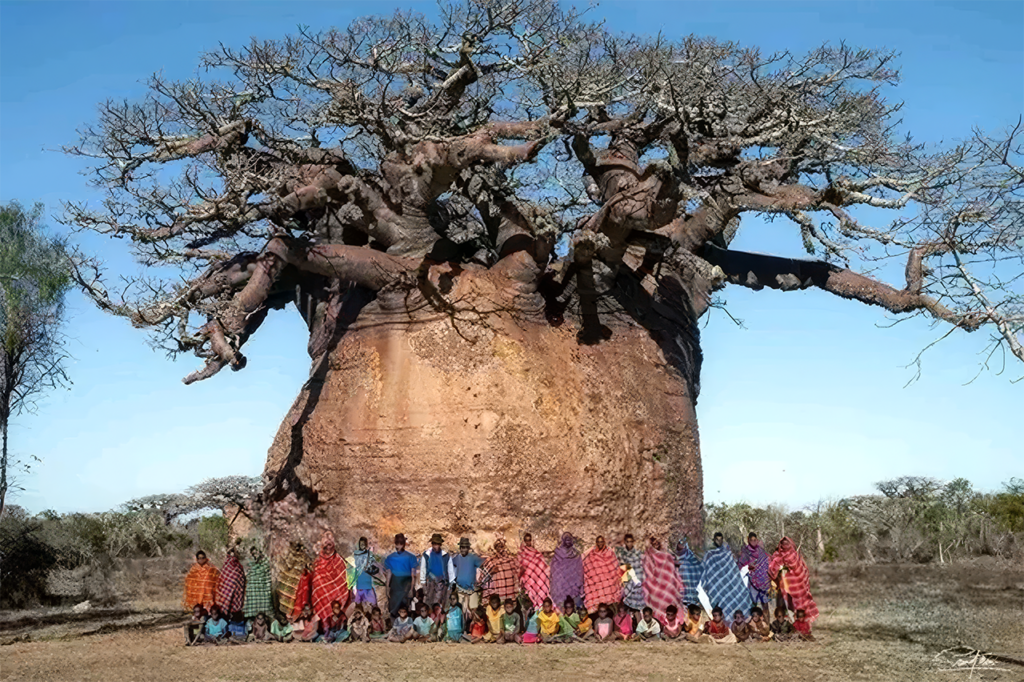
Just when you thought, ‘Wow! The blue whale is humongous!’, along comes the baobab tree. In the Limpopo Province, near Tzaneen, is a 6 000-year-old specimen of this tree, also known as the ‘upside down tree’, which is 72 ft. tall and has a girth of 155 ft. The trunk has been hollowed out and a small pub has been built inside, complete with seats, a music system and space for 60 people.
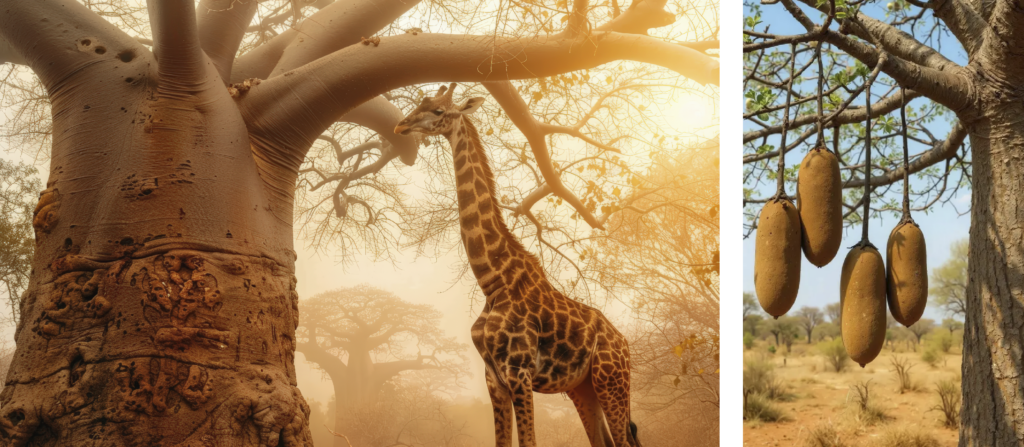
A ‘normal’ baobab with a circumference of about 100 ft. can store nearly 25,000 gallons of water, which weighs about 100 tons. The baobab is an important food source for local elephants, monkeys and baboons, and one of its fruits has the same vitamin C content as four oranges. The flowers are pollinated by bats and bushbabies, and the pollen can be used as glue. The seeds are a source of protein, oil and phosphates; they also have a high calcium content. Even the trunk is useful – because it is fibrous, it can be woven into rope mats and paper. And the bark? You can use it to make beer and tea.