Symbiosis – any close and long-term biological interaction between two organisms of different species.
Nature is filled with amazing examples of symbiotic relationships. There are three forms of symbiosis – a positive interaction or relationship between two organisms where both organisms benefit from the interaction.
Secondly, an interaction or relationship between two organisms in which only one partner benefits and the other is not harmed.
And parasitic relationship where one of the organisms (the parasite) benefits from the interaction, whilst the other organism (the host) is usually affected negatively.
In Africa we find symbiotic relationships every day, some are obvious but many are not.
Here are some of Africa’s frequently observed Symbiotic Relationships:
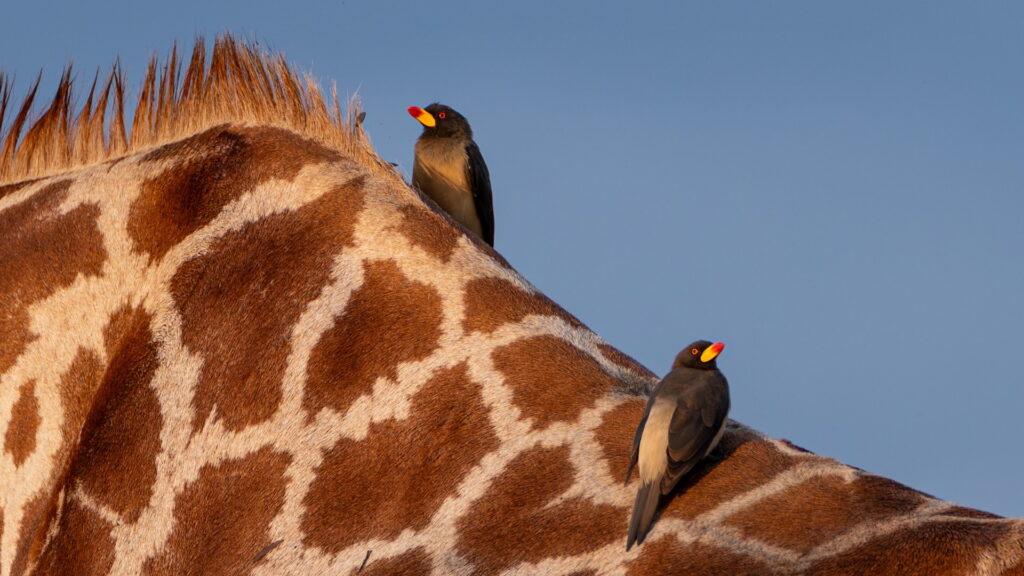
Red-billed and Yellow-billed oxpeckers maintain a complex relationship with large African herbivores (rhinos, buffalo, giraffes), feeding on ticks, larvae, and insects. While removing parasites, they also eat earwax and blood from wounds, sometimes maintaining or enlarging wounds to feed.
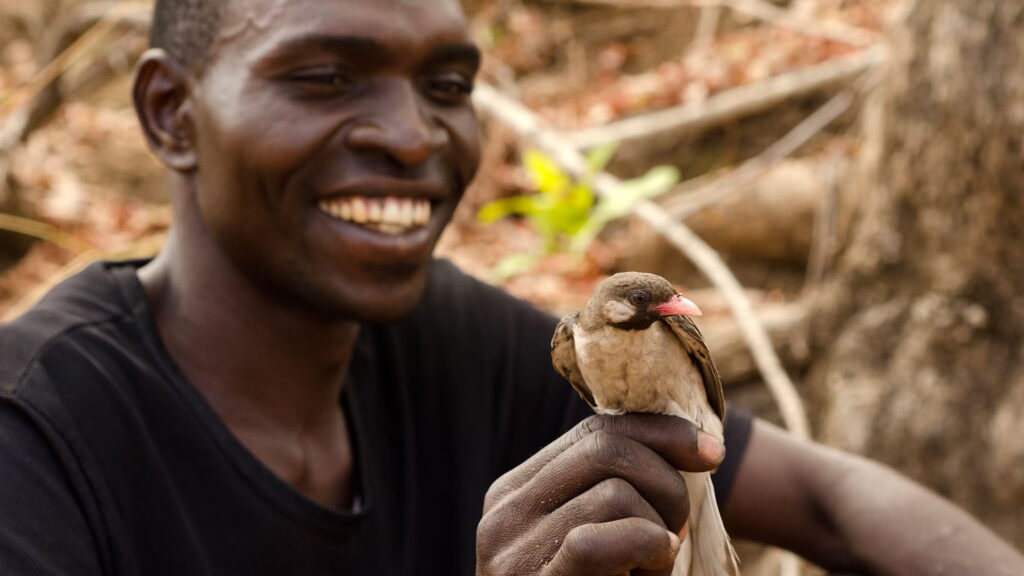
Greater honeyguides engage in a remarkable mutualistic relationship with humans in Africa, actively guiding them to wild beehives using distinct, chattering calls and specific flight paths. The birds benefit by feeding on the beeswax and larvae left behind after humans harvest the honey.
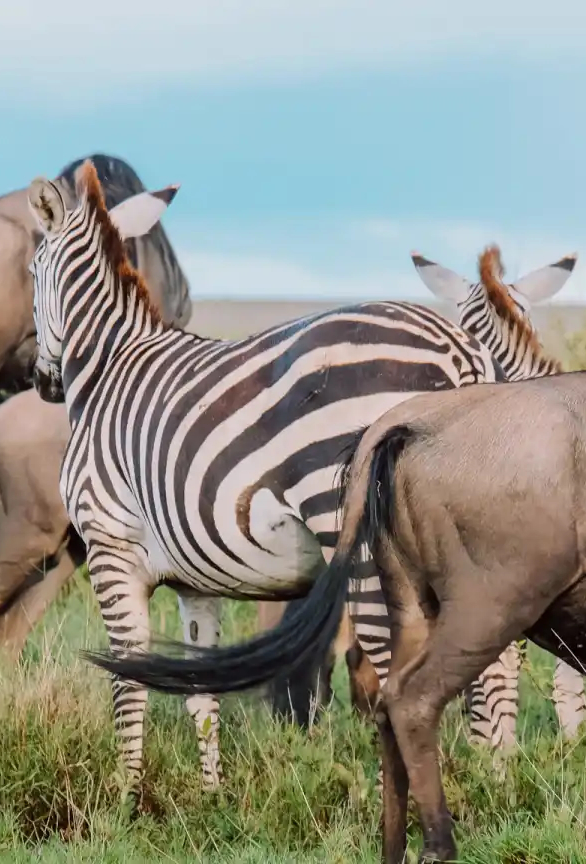
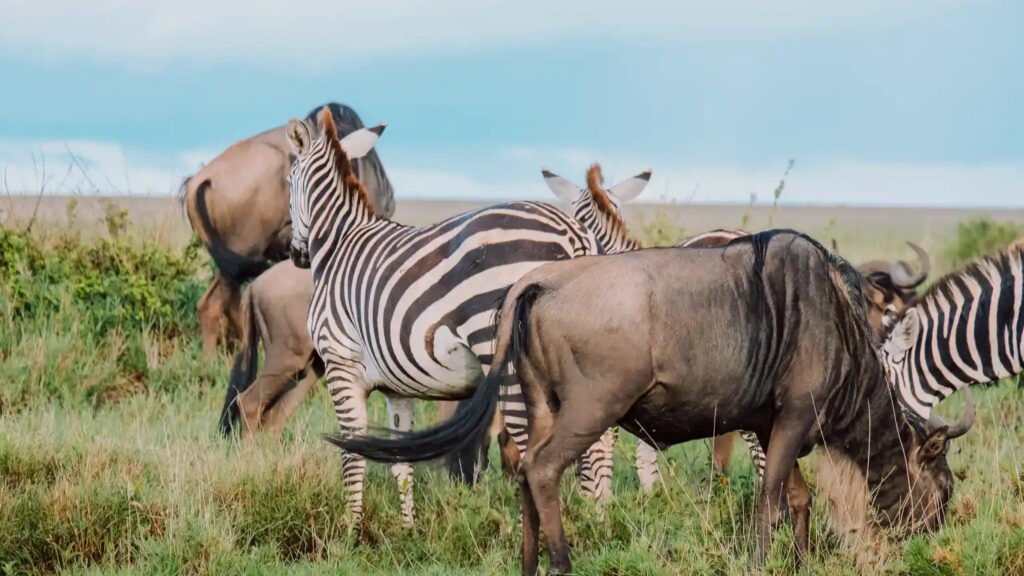
Mixed-species herds of zebras and wildebeest in African savannas enhance survival through increased vigilance and predator dilution. Zebras, with better eyesight, and wildebeest, with keen hearing and scent, provide complementary, early detection of threats.
This association reduces individual predation risk and allows for more efficient foraging. In addition, Zebras prefer the longer tougher grasses, whereas wildebeest prefer shorter, more tender shoots. This partition of resources means they can quite happily graze side by side without exerting pressure on each other.
Here are some lesser known relationships:
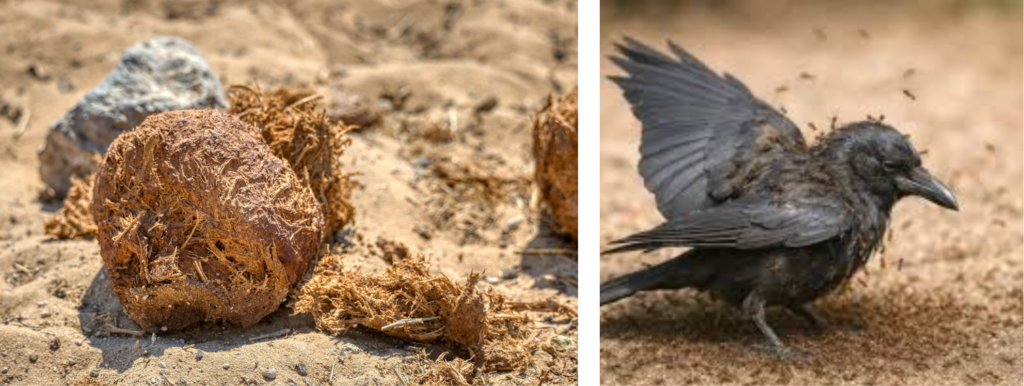
- Elephants are essential in the maintenance of grasslands. Through their eating of immature acacia shrubs and small bushes, grazing animals like elephant maintain grassland habitats.
- Their dung, largely comprised of plant matter and the carbon sequestered by those plants, is easier to break down than is a tree that is decomposing without having passed through an elephant’s gastronomic system.
This means that the conversion of plant matter into soil, through the vector of an elephant’s digestion, is a more effective, less carbon-emitting method for creating healthy soil.
- Passive anting is where a bird will intentionally lie on an ants nest and allow them to crawl all over their bodies. The ants release acids that act as an insecticide to remove parasites from the bird’s feathers.
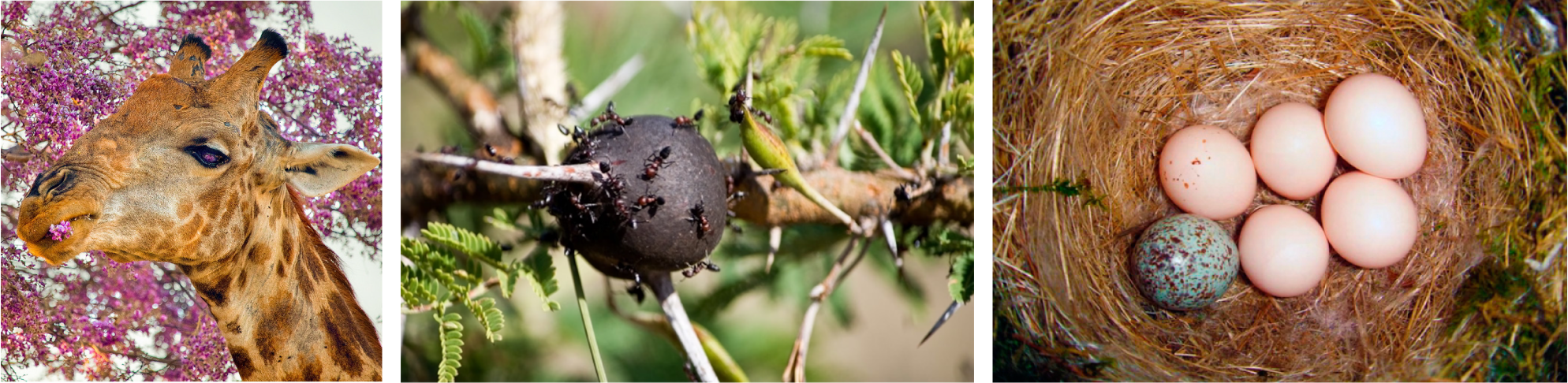
Giraffes are the number one mammal pollinators for the knob thorn tree. Flowers from these trees blossom high up so that, as the giraffes feed, the pollen attaches to their fur. Giraffes are the perfect mode of transport for the pollen as they feed from one tree to the next.
Whistling thorn trees engage in a vital, mutually beneficial relationship with ants, which protect the trees from herbivores, including massive elephants. The trees provide housing in swollen thorns and nectar for food, while the ants act as bodyguards, stinging the trunks and mouths of browsers.
However this interaction is even more complex. There is another layer of smaller creatures called aphids that suck the sap from the thorn producing a sweet substance called “honeydew”. It is actually this honeydew that the ants feed on. If the ants get too greedy the thorn tree releases a bitter substance to limit the sweetness of the sap.
We have discovered that there is still another layer to this puzzle. This involves microscopic worms called nematodes. These creatures infect the roots of the thorn trees changing the chemicals the plant can make. It is these chemicals that affect the aphids, which affect the ants, which affect the elephants.
Cuckoos are renowned “brood parasites” that lay their eggs in the nests of other, often smaller, bird species to avoid the energy cost of raising their own young. Female cuckoo’s, often specializing in specific hosts, lay eggs that mimic the host’s eggs, which hatch quickly. The cuckoo chicks instinctively evict the host’s eggs or chicks.
Epiphytic plants, or air plants, are non-parasitic organisms that grow on trees primarily to access better sunlight, moisture, and nutrients in the canopy, rather than relying on soil. They use trees solely as structural support, absorbing water and nutrients from the air and debris.
One of the most enjoyable aspects of an African safari is to spend time with your safari guide delving into these many complex symbiotic relationships. A good guide will jump at the opportunity to share his/her knowledge with you about these symbiotic intricacies of the African bush.
DID YOU KNOW?
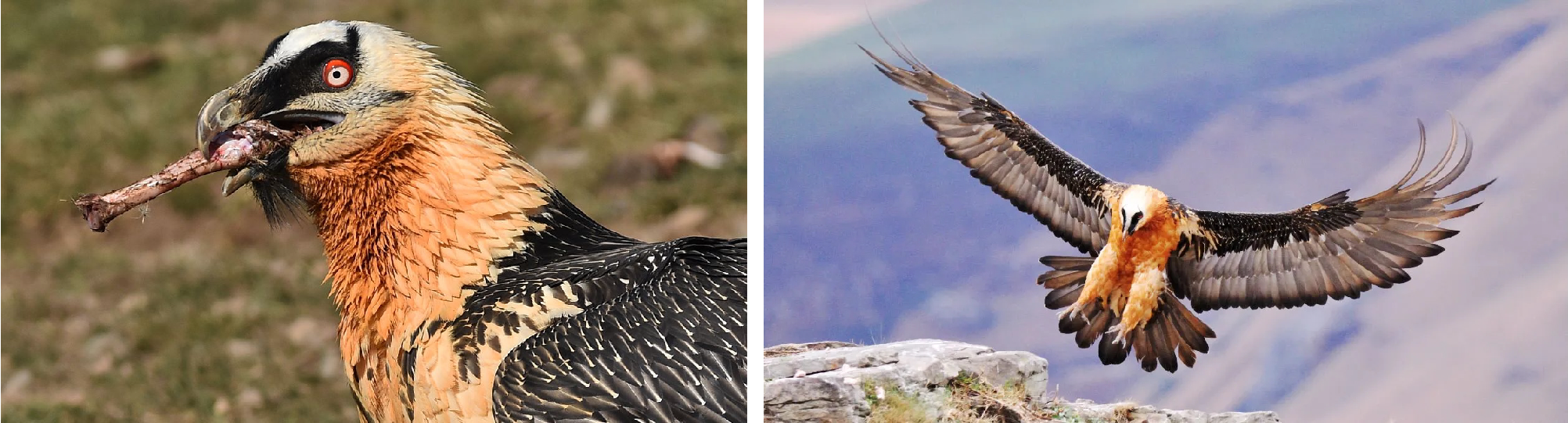
Bearded Vultures feed on bones. They are the only animal in the world that feeds almost exclusively on bone with a special love for the marrow.
These endangered birds weigh about 13 lbs with a wingspan of 8.5 ft.
Once other vultures have cleaned a carcass, bearded vultures cut the bones free from the ligaments, smaller bones are eaten whole. The larger bones are broken into smaller pieces.
This is achieved by flying to a height of about 500 ft and dropping the bones onto rocks.
This diet ensures the bird of a nutritious food source with virtually no competition.