
With this newsletter I thought I would explain the dynamics, reasons for and impact of the wonder of nature called the Great Migration.
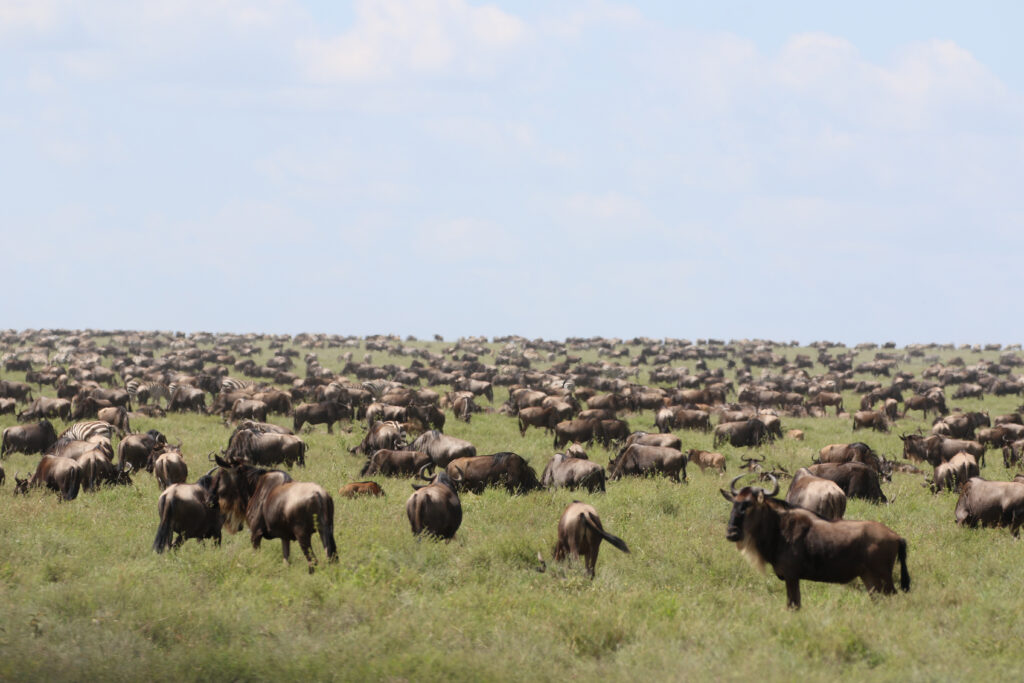
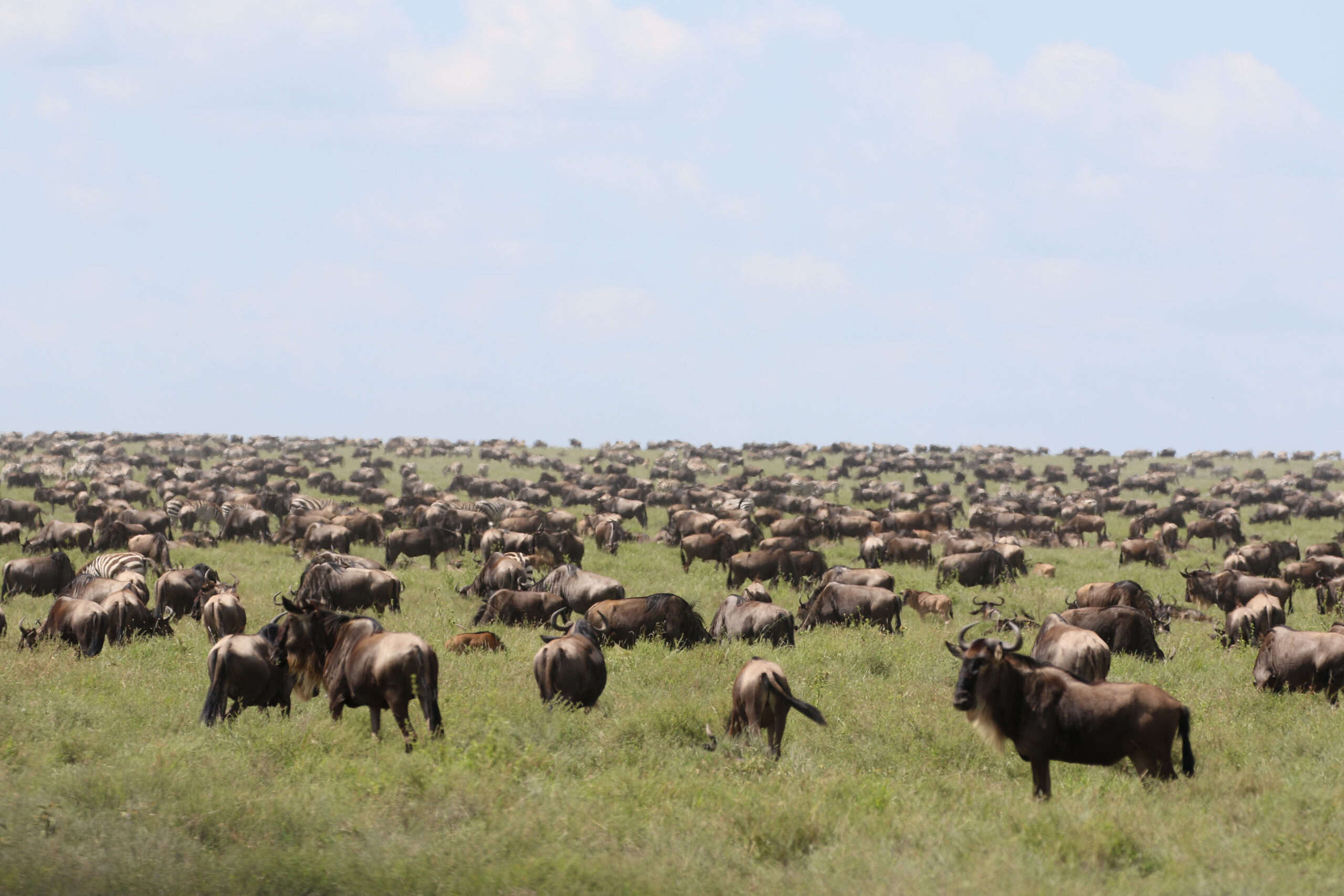
Every year, the plains of East Africa come alive as more than 1.2 million wildebeest embark upon one of nature’s greatest journeys. Joined by hundreds of thousands of zebras, gazelles, and other grazers, they move across the Serengeti in Tanzania and into Kenya’s Maasai Mara in search of fresh, rain-fed grass
Known as the Great Migration, this is the largest overland migration on Earth. It is not a single event with a fixed start or finish, but a continuous cycle that repeats year after year. Covering roughly 500 to 800 miles, the herds follow ancient routes shaped by rainfall, grazing conditions, and survival instinct.

A Journey Guided by Rain
The migration is driven primarily by the search for food and water. As seasonal rains move across the Serengeti-Mara ecosystem, new grass appears in different regions. Wildebeest and zebra respond quickly, following the changing
landscape to find the most nutritious grazing.
Many experts believe the animals can sense distant storms through sound, scent, or shifts in weather patterns. Whatever guides them, their movements are remarkably precise and have continued for generations.
The Annual Cycle
From January to March, the southern Serengeti becomes calving season. Hundreds of thousands of wildebeest calves are born within weeks, timed to coincide with nutrient-rich grasses created by recent rains. Newborn calves can stand and run within minutes, but predators are never far away.
As the dry season approaches between April and June, the herds begin moving north and west. Long lines of animals stretch across the plains in search of greener pasture.
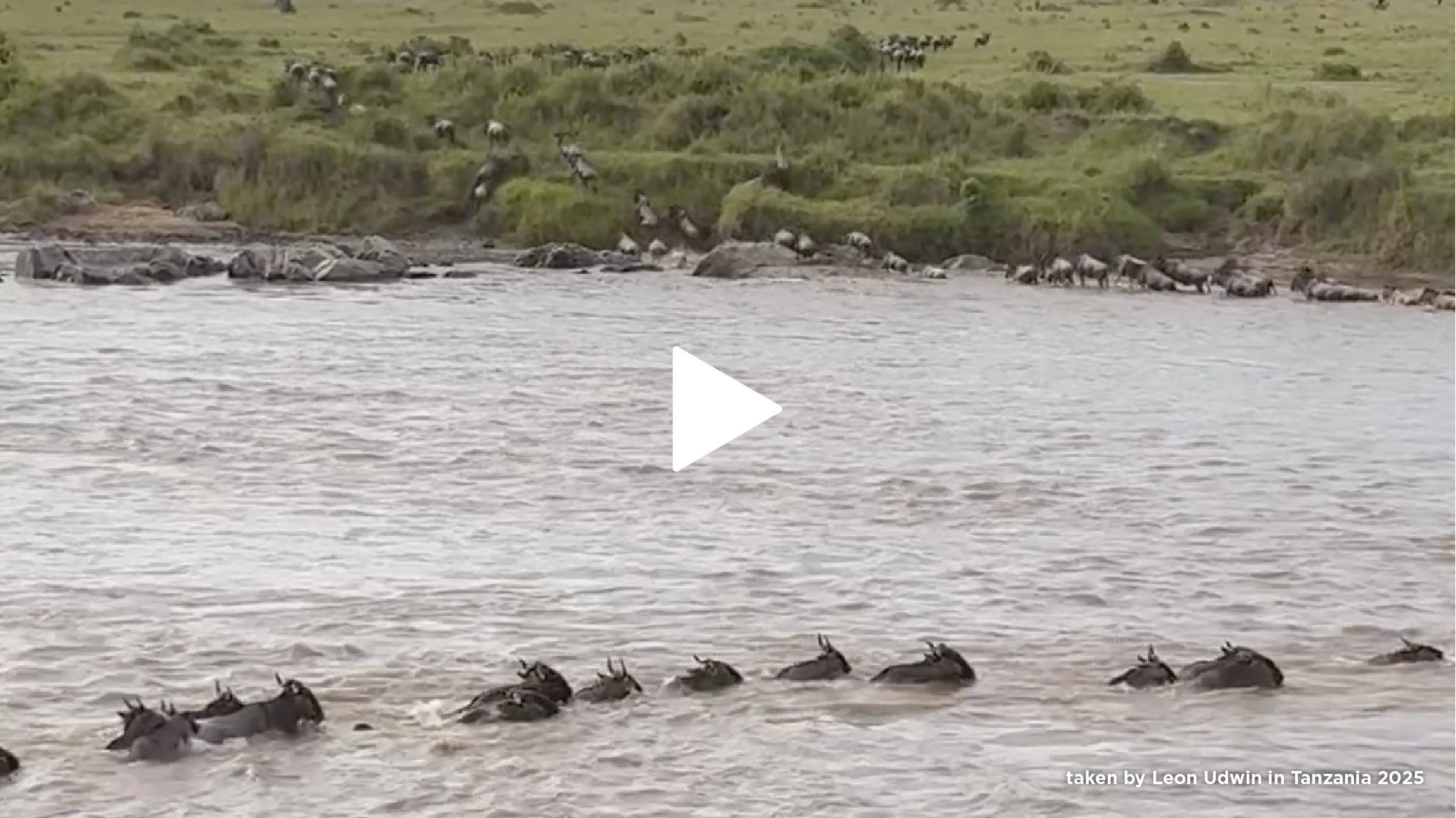
From July to October comes the most dramatic phase: the river crossings. At the Grumeti and Mara Rivers, the herds gather at steep banks before suddenly plunging into dangerous waters filled with strong currents and crocodiles. These crossings are among the most iconic wildlife scenes on Earth.
When rains return in November and December, the animals gradually move south again, beginning the cycle once more.
Nature’s Perfect Teamwork
The migration is not just a mass movement of animals—it is a highly effcient ecological system.
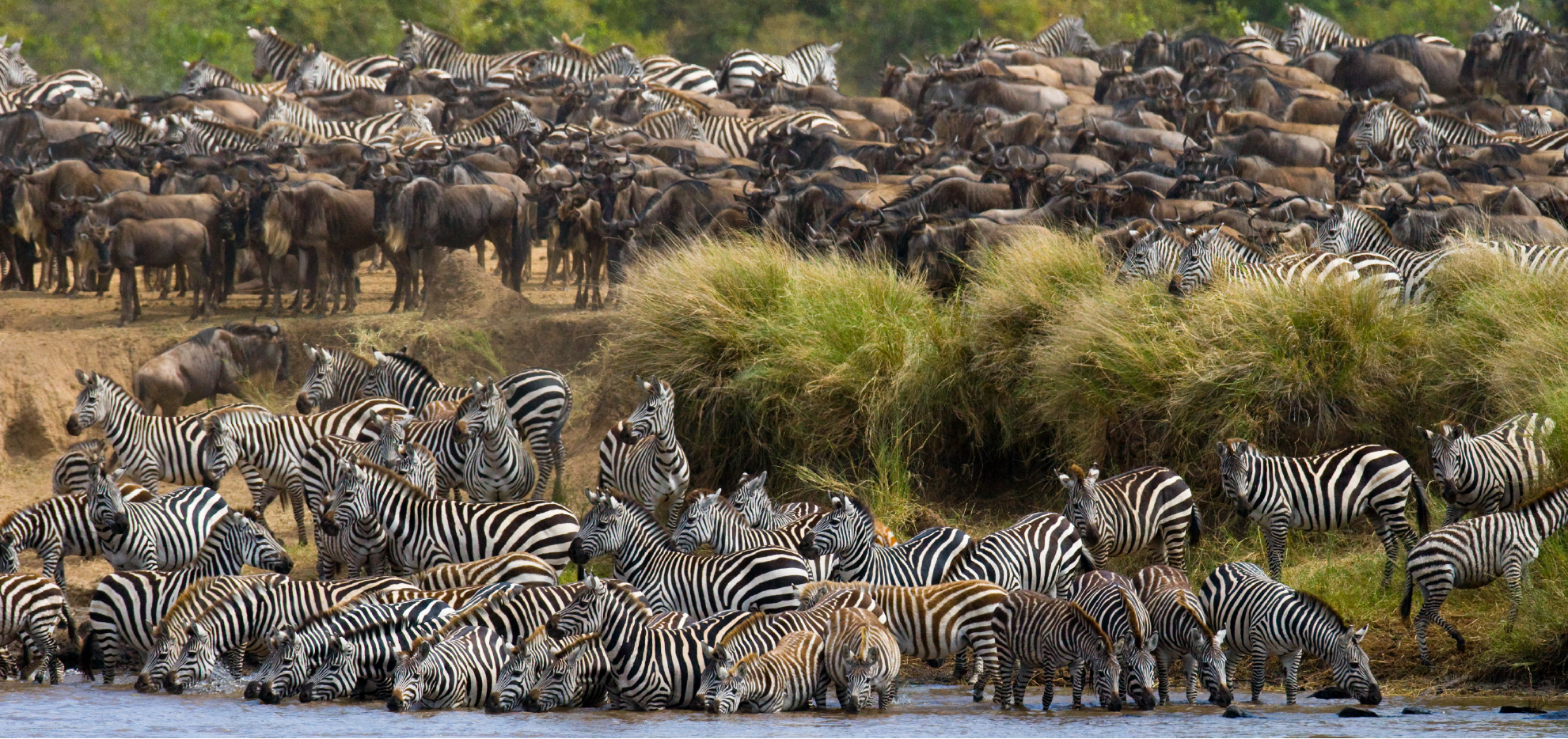
Zebras usually graze first, feeding on tall, coarse grasses. Wildebeest follow behind, eating the shorter, fresher shoots that remain. Gazelles then feed on tender herbs and low grasses left behind.
This grazing succession reduces competition and allows multiple species to thrive while sharing the same habitat.
Life, Death, and Balance
The Great Migration is also a story of danger and survival. Lions, cheetahs, leopards, hyenas, wild dogs, and crocodiles all depend on the herds for food. Young, weak, or injured animals are especially vulnerable.
Yet predation is part of the balance. The migration supports predators, scavengers, birds, insects, and soil life. Even in death, animals return nutrients to the land and help sustain the ecosystem.
Why the Migration Matters
Wildebeest and zebra are more than travelers—they are ecosystem engineers.
By grazing millions of tons of grass each year, they keep the savanna open, prevent overgrowth, and encourage fresh plant growth. Their dung fertilizes the soil, spreading nutrients across the plains.
Their grazing also helps reduce wildfire risk. Without large herds consuming dry grass, fires would burn more intensely
and release more carbon into the atmosphere. Healthy grasslands store carbon in their roots, making the migration important not only for wildlife but also for climate balance.
Protecting a Natural Wonder
The Great Migration depends on open landscapes and connected routes across Tanzania and Kenya. Fences, roads, habitat loss, and climate change threaten this ancient movement.
Protecting the migration means preserving one of the most productive ecosystems on Earth and ensuring future generations can witness this extraordinary event.
The Great Migration is more than a wildlife spectacle. It is the heartbeat of East Africa—a timeless circle of life moving across the plains.
DID YOU KNOW
Humans eat more than 500 kinds of insects – voluntarily. Microscopic parts of insect species are literally ‘hidden’ in the flour we use for our daily bread, in the chocolate that satisfies our sweet tooth, in the vegetables that are good for us and in the fruit we enjoy. Such insect parts also lurk in tomato sauce, peanut butter and canned sweetcorn. Don’t worry! Health authorities have strict guidelines for the acceptable levels of insect parts in food. The chemicals necessary to eliminate these insect parts would cause a more serious threat to people than the actual insect parts.
In many parts of Africa, insects like flying ants (termites) are fried and eaten as a delicacy and a prime source of protein. On the shores of Lake Victoria the local people have decided to turn a major source of irritation – the clouds of midges that hover overhead – into a source of sustenance. They catch handfuls of the tiny insects and press them into cakes that are baked and enjoyed. Problem solved!
The palm weevil of Nigeria is a large insect with fat, fleshy larvae. When the larvae are pan fried they make a delicious snack, just like South Africa’s mopane worm (which is actually the emperor moth in disguise). These fat, juicy grubs can even be bought at the local supermarket, and are commonly sold as dried snacks.
A grasshopper is an excellent source of protein and fat, while a dung beetle is only slightly less nutritious.
